
How Michael O'Leary turned Ryanair into a billion euro business
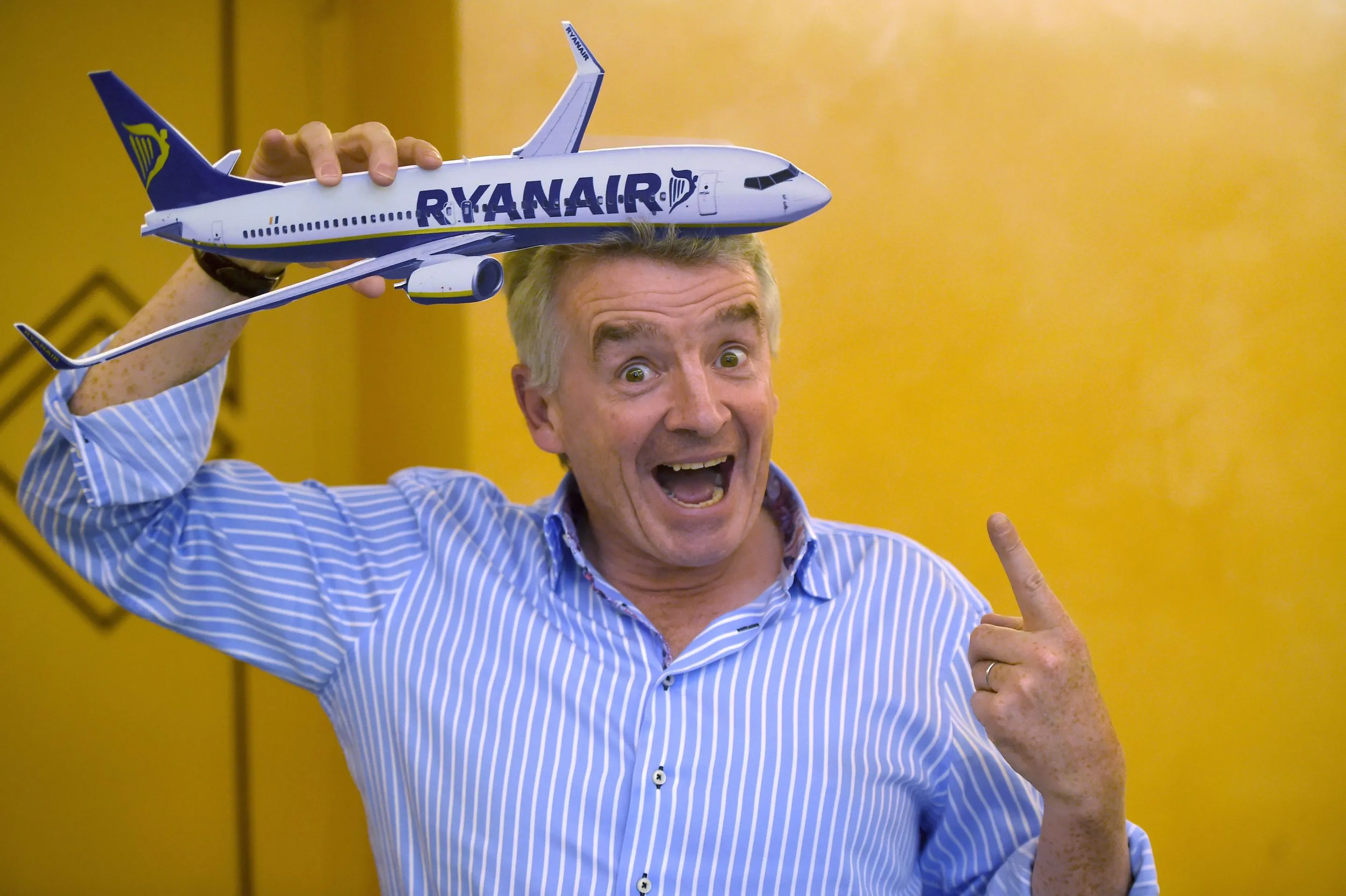
Michael O’Leary CEO of Ryanair
Michael O'Leary did not found Ryanair, but he became the executive most closely associated with transforming it from a loss-making Irish airline into Europe's dominant low-cost carrier.
Ryanair was founded by the Ryan family in 1985. By the beginning of the 1990s it had accumulated heavy losses and its future was uncertain. O'Leary ultimately took the low-cost principles pioneered by Southwest Airlines in the US — cheap fares, tight cost control, fast aircraft turnaround times and a simplified operation — and pushed them considerably further in Europe. He became Ryanair's chief executive in 1994.
The scale of what followed is extraordinary. For the financial year ending 31 March 2026, Ryanair generated €15.54 billion in revenue, carried 208.4 million passengers and recorded a statutory €2.17 billion profit after tax. The group employed 27,081 people at the end of FY26 and operated a fleet of 647 aircraft.
At a Glance
• 1985 — Ryanair was founded in Ireland by the Ryan family.
• 1994 — Michael O'Leary became chief executive.
• £20m — approximately the accumulated losses Ryanair had built up by 1991, according to contemporary reporting.
• 1997 — Ryanair floated on the Dublin and Nasdaq stock markets.
• 208.4 million — passengers carried in the financial year ending March 2026.
• €15.54 billion — Ryanair Group revenue in FY26.
• €10.56 billion — scheduled ticket revenue in FY26.
• €4.99 billion — ancillary revenue from areas such as baggage, priority boarding and other optional services in FY26.
• €2.17 billion — statutory profit after tax in FY26.
• €2.26 billion — profit after tax before exceptional items reported by Ryanair for FY26.
• 27,081 — Ryanair Group employees in FY26.
• 4% — Michael O'Leary's reported shareholding in Ryanair at 31 March 2026.
Information checked and updated: September 2026
How Did Michael O'Leary Turn Ryanair Into a Billion-Euro Business?
The short answer is that Ryanair did not become enormous by trying to operate like a traditional airline.
O'Leary helped build a model designed around one overriding principle:
Keep the cost of carrying each passenger as low as possible, then use low fares to fill more seats and stimulate more demand.
That sounds simple. Executing it across hundreds of aircraft and dozens of European markets is much harder.
Ryanair's growth can largely be explained through seven interconnected decisions.
1. He Took Inspiration From Southwest Airlines
Ryanair's early business was struggling.
Contemporary reporting ahead of Ryanair's 1997 flotation showed that the company had accumulated losses of almost £20 million by 1991.
Tony Ryan sent O'Leary to the United States to study Southwest Airlines, which had demonstrated that an airline could succeed by stripping complexity and cost out of short-haul flying.
The Southwest model included ideas such as:
• Low fares.
• Point-to-point flying rather than relying heavily on connecting hubs.
• Fast aircraft turnaround times.
• High aircraft utilisation.
• Simple operations.
• Tight control of costs.
• Stimulating new travel demand instead of relying only on existing airline passengers.
O'Leary did not simply copy Southwest. Ryanair adapted the concept to the European market and became even more aggressive about removing costs and charging separately for optional services.
That became the foundation of modern Ryanair.
2. Ryanair Made Cheap Fares Its Main Product
Traditional airlines historically bundled numerous services into one ticket.
Ryanair went in the opposite direction.
The basic product became extremely simple: a seat that gets a passenger from one airport to another.
Everything else could increasingly be treated separately.
The logic is important.
Suppose a traditional airline needs to charge €150 for a seat to cover its cost structure.
If Ryanair can operate the same journey profitably while selling many seats for substantially less, the lower price does not simply steal customers from another airline.
It can create entirely new customers.
People who might otherwise drive, take a ferry, stay at home or travel less frequently suddenly fly.
That is what Ryanair describes as the “Ryanair Effect”: low fares stimulating significant passenger growth when it enters markets.
The strategy worked extraordinarily well.
In 1991 Ryanair carried roughly 700,000 passengers.
By the period leading up to its flotation in 1997, that had grown to around three million passengers.
By FY26, the figure was:
208.4 million passengers.
That is close to 300 times the passenger volume reported in 1991.
3. European Deregulation Arrived at Exactly the Right Time
O'Leary's strategy also benefited from one enormous structural change that Ryanair itself did not create: the liberalisation of European aviation.
Until the late 1980s and early 1990s, European aviation was far more heavily regulated.
Governments often controlled:
• Which airlines could operate routes.
• Which destinations could be served.
• Capacity.
• Pricing.
• Market access.
The European Community progressively dismantled many of these restrictions.
Its Third Aviation Package was adopted in 1992 and entered into force from January 1993, creating the foundations of a genuinely liberalised European aviation market. After the transition was completed, EU carriers gained much greater freedom to operate throughout the bloc.
This was a huge opportunity for Ryanair.
Rather than remaining predominantly an Irish airline flying between Ireland and Britain, it could become a pan-European airline.
Aircraft could be based in different European countries.
New routes could be opened quickly.
Poorly performing capacity could be moved elsewhere.
Ryanair's low-cost model and European deregulation effectively arrived at the same moment.
That combination was transformational.
4. O'Leary Became Obsessed With Cost
Cheap fares only work if the cost base underneath them is also cheap.
This is arguably the most important part of the entire Ryanair story.
O'Leary turned cost control into part of the company's culture.
Using mainly one aircraft family
Operating large numbers of similar Boeing 737 aircraft reduces complexity.
It can simplify:
• Pilot training.
• Engineering.
• Spare parts.
• Maintenance.
• Scheduling.
• Cabin configuration.
The Ryanair Group fleet stood at 647 aircraft at 31 March 2026, including all 210 Boeing 737-8200 “Gamechanger” aircraft ordered at that stage.
Putting more seats into each aircraft
More passengers spread the cost of a flight across more paying customers.
The newer Boeing 737-8200 aircraft are designed to carry more passengers while using less fuel per seat than the older aircraft they replace.
Fast turnarounds
An aircraft earns money primarily when it is flying.
Every unnecessary minute sitting on the ground reduces potential utilisation.
Fast boarding, quick cleaning and efficient turnaround procedures therefore matter financially.
Even an improvement that looks small at one aircraft can become enormous when multiplied across:
hundreds of aircraft × thousands of flights × 365 days.
Airport bargaining
Ryanair also became famous for using secondary and regional airports where charges could be lower than major hubs.
A smaller airport may be willing to offer attractive terms because Ryanair can deliver hundreds of thousands — or potentially millions — of passengers into its region.
O'Leary used that bargaining power aggressively.
The result is a mutually dependent relationship:
Ryanair wants cheaper airport costs.
The airport wants Ryanair's passengers.
That can give Ryanair leverage that a smaller airline simply does not possess.
5. Ryanair Turned Optional Extras Into a Multi-Billion-Euro Business
One of the biggest misconceptions about Ryanair is that it makes all its money from airline tickets.
It does not.
During FY26:
• Scheduled ticket revenue was €10.56 billion.
• Ancillary revenue was €4.99 billion.
• Total revenue was €15.54 billion.
Ancillary revenue includes money earned from additional products and services rather than the basic airfare.
Examples can include:
• Checked baggage.
• Reserved seating.
• Priority boarding.
• On-board sales.
• Car hire commissions.
• Other travel-related services.
Based on Ryanair's FY26 figures, ancillary income represented approximately 32% of total group revenue.
That means roughly €1 in every €3 of Ryanair's revenue did not come from the base ticket price.
This is central to the model.
Ryanair can advertise a very low entry fare while earning more from customers who voluntarily purchase additional services.
Average ancillary spend
FY26 ancillary revenue was approximately:
€4.99bn ÷ 208.4m passengers = about €24 per passenger.
Ryanair itself reported ancillary revenue of approximately €24 per passenger for FY26.
That €24 becomes very powerful when multiplied across more than 208 million passengers.
6. Scale Became One of Ryanair's Biggest Competitive Advantages
Once Ryanair became large, getting larger created additional advantages.
A huge airline can potentially negotiate from a much stronger position when buying:
• Aircraft.
• Engines.
• Airport capacity.
• Ground handling.
• Insurance.
• Technology.
• Maintenance.
• Advertising.
The same principle applies to its internal infrastructure.
A booking system or marketing campaign may have a high initial cost, but spreading it across 200 million passengers dramatically reduces the cost per passenger.
Scale therefore reinforces the low-cost model.
Low costs allow low fares.
Low fares attract passengers.
More passengers create scale.
Scale can reduce costs further.
That creates a powerful cycle:
Lower costs → lower fares → more passengers → greater scale → stronger purchasing power → lower unit costs.
Competitors can copy individual Ryanair charges or fare promotions.
Replicating the entire cost structure at Ryanair's scale is considerably harder.
7. Ryanair Was Prepared to Sacrifice Traditional Customer-Service Conventions
For much of its history, Ryanair was unapologetic about prioritising price and efficiency over a premium customer experience.
That occasionally created reputational problems.
But there was a business logic underneath it.
Every service included free of charge ultimately has to be paid for somewhere.
Ryanair instead separated the product into two categories:
Essential:
Transport the passenger safely from A to B.
Optional:
Allow customers to pay for extras they personally value.
This approach helped produce very low headline fares, although passengers who purchase several optional extras may end up paying considerably more than the initial advertised fare.
Ryanair has also modified its approach over time.
Its “Always Getting Better” initiative in the 2010s attempted to improve areas of customer experience without abandoning the underlying low-cost structure.
That adaptability matters.
The company has repeatedly shown that it is willing to change policies when management believes the economics justify doing so.
From £20 Million of Losses to a Stock Market Flotation
One of the clearest measures of Ryanair's early turnaround came in the years before its IPO.
Contemporary reporting shows:
1991
• Approximately 700,000 passengers.
• Revenue of approximately £50 million.
• Profit of approximately £300,000.
• Accumulated historical losses approaching £20 million.
1997
Before the flotation:
• Passenger numbers had increased to approximately three million.
• Revenue had risen to approximately £136 million.
• Profits had increased to approximately £26 million.
That improvement allowed Ryanair to go public.
The company's 1997 flotation was originally expected to value it at between approximately £261 million and £309 million.
Demand was enormous.
Investors reportedly sought more than ten times the number of shares available.
Shares were offered at 195p and surged to approximately 315p during their first day of conditional trading, valuing Ryanair at around £500 million at that price.
It was an important milestone.
Ryanair was no longer merely a rescued airline.
It was becoming a major publicly traded European growth company.
Ryanair Then Became a €15.5 Billion Revenue Company
Fast-forward to the financial year ending 31 March 2026.
Ryanair reported:
Michael O'Leary did not found Ryanair, but he became the executive most closely associated with transforming it from a loss-making Irish airline into Europe's dominant low-cost carrier.
Ryanair was founded by the Ryan family in 1985. By the beginning of the 1990s it had accumulated heavy losses and its future was uncertain. O'Leary ultimately took the low-cost principles pioneered by Southwest Airlines in the US — cheap fares, tight cost control, fast aircraft turnaround times and a simplified operation — and pushed them considerably further in Europe. He became Ryanair's chief executive in 1994.
The scale of what followed is extraordinary. For the financial year ending 31 March 2026, Ryanair generated €15.54 billion in revenue, carried 208.4 million passengers and recorded a statutory €2.17 billion profit after tax. The group employed 27,081 people at the end of FY26 and operated a fleet of 647 aircraft.
At a Glance
• 1985 — Ryanair was founded in Ireland by the Ryan family.
• 1994 — Michael O'Leary became chief executive.
• £20m — approximately the accumulated losses Ryanair had built up by 1991, according to contemporary reporting.
• 1997 — Ryanair floated on the Dublin and Nasdaq stock markets.
• 208.4 million — passengers carried in the financial year ending March 2026.
• €15.54 billion — Ryanair Group revenue in FY26.
• €10.56 billion — scheduled ticket revenue in FY26.
• €4.99 billion — ancillary revenue from areas such as baggage, priority boarding and other optional services in FY26.
• €2.17 billion — statutory profit after tax in FY26.
• €2.26 billion — profit after tax before exceptional items reported by Ryanair for FY26.
• 27,081 — Ryanair Group employees in FY26.
• 4% — Michael O'Leary's reported shareholding in Ryanair at 31 March 2026.
Information checked and updated: September 2026
How Did Michael O'Leary Turn Ryanair Into a Billion-Euro Business?
The short answer is that Ryanair did not become enormous by trying to operate like a traditional airline.
O'Leary helped build a model designed around one overriding principle:
Keep the cost of carrying each passenger as low as possible, then use low fares to fill more seats and stimulate more demand.
That sounds simple. Executing it across hundreds of aircraft and dozens of European markets is much harder.
Ryanair's growth can largely be explained through seven interconnected decisions.
1. He Took Inspiration From Southwest Airlines
Ryanair's early business was struggling.
Contemporary reporting ahead of Ryanair's 1997 flotation showed that the company had accumulated losses of almost £20 million by 1991.
Tony Ryan sent O'Leary to the United States to study Southwest Airlines, which had demonstrated that an airline could succeed by stripping complexity and cost out of short-haul flying.
The Southwest model included ideas such as:
• Low fares.
• Point-to-point flying rather than relying heavily on connecting hubs.
• Fast aircraft turnaround times.
• High aircraft utilisation.
• Simple operations.
• Tight control of costs.
• Stimulating new travel demand instead of relying only on existing airline passengers.
O'Leary did not simply copy Southwest. Ryanair adapted the concept to the European market and became even more aggressive about removing costs and charging separately for optional services.
That became the foundation of modern Ryanair.
2. Ryanair Made Cheap Fares Its Main Product
Traditional airlines historically bundled numerous services into one ticket.
Ryanair went in the opposite direction.
The basic product became extremely simple: a seat that gets a passenger from one airport to another.
Everything else could increasingly be treated separately.
The logic is important.
Suppose a traditional airline needs to charge €150 for a seat to cover its cost structure.
If Ryanair can operate the same journey profitably while selling many seats for substantially less, the lower price does not simply steal customers from another airline.
It can create entirely new customers.
People who might otherwise drive, take a ferry, stay at home or travel less frequently suddenly fly.
That is what Ryanair describes as the “Ryanair Effect”: low fares stimulating significant passenger growth when it enters markets.
The strategy worked extraordinarily well.
In 1991 Ryanair carried roughly 700,000 passengers.
By the period leading up to its flotation in 1997, that had grown to around three million passengers.
By FY26, the figure was:
208.4 million passengers.
That is close to 300 times the passenger volume reported in 1991.
3. European Deregulation Arrived at Exactly the Right Time
O'Leary's strategy also benefited from one enormous structural change that Ryanair itself did not create: the liberalisation of European aviation.
Until the late 1980s and early 1990s, European aviation was far more heavily regulated.
Governments often controlled:
• Which airlines could operate routes.
• Which destinations could be served.
• Capacity.
• Pricing.
• Market access.
The European Community progressively dismantled many of these restrictions.
Its Third Aviation Package was adopted in 1992 and entered into force from January 1993, creating the foundations of a genuinely liberalised European aviation market. After the transition was completed, EU carriers gained much greater freedom to operate throughout the bloc.
This was a huge opportunity for Ryanair.
Rather than remaining predominantly an Irish airline flying between Ireland and Britain, it could become a pan-European airline.
Aircraft could be based in different European countries.
New routes could be opened quickly.
Poorly performing capacity could be moved elsewhere.
Ryanair's low-cost model and European deregulation effectively arrived at the same moment.
That combination was transformational.
4. O'Leary Became Obsessed With Cost
Cheap fares only work if the cost base underneath them is also cheap.
This is arguably the most important part of the entire Ryanair story.
O'Leary turned cost control into part of the company's culture.
Using mainly one aircraft family
Operating large numbers of similar Boeing 737 aircraft reduces complexity.
It can simplify:
• Pilot training.
• Engineering.
• Spare parts.
• Maintenance.
• Scheduling.
• Cabin configuration.
The Ryanair Group fleet stood at 647 aircraft at 31 March 2026, including all 210 Boeing 737-8200 “Gamechanger” aircraft ordered at that stage.
Putting more seats into each aircraft
More passengers spread the cost of a flight across more paying customers.
The newer Boeing 737-8200 aircraft are designed to carry more passengers while using less fuel per seat than the older aircraft they replace.
Fast turnarounds
An aircraft earns money primarily when it is flying.
Every unnecessary minute sitting on the ground reduces potential utilisation.
Fast boarding, quick cleaning and efficient turnaround procedures therefore matter financially.
Even an improvement that looks small at one aircraft can become enormous when multiplied across:
hundreds of aircraft × thousands of flights × 365 days.
Airport bargaining
Ryanair also became famous for using secondary and regional airports where charges could be lower than major hubs.
A smaller airport may be willing to offer attractive terms because Ryanair can deliver hundreds of thousands — or potentially millions — of passengers into its region.
O'Leary used that bargaining power aggressively.
The result is a mutually dependent relationship:
Ryanair wants cheaper airport costs.
The airport wants Ryanair's passengers.
That can give Ryanair leverage that a smaller airline simply does not possess.
5. Ryanair Turned Optional Extras Into a Multi-Billion-Euro Business
One of the biggest misconceptions about Ryanair is that it makes all its money from airline tickets.
It does not.
During FY26:
• Scheduled ticket revenue was €10.56 billion.
• Ancillary revenue was €4.99 billion.
• Total revenue was €15.54 billion.
Ancillary revenue includes money earned from additional products and services rather than the basic airfare.
Examples can include:
• Checked baggage.
• Reserved seating.
• Priority boarding.
• On-board sales.
• Car hire commissions.
• Other travel-related services.
Based on Ryanair's FY26 figures, ancillary income represented approximately 32% of total group revenue.
That means roughly €1 in every €3 of Ryanair's revenue did not come from the base ticket price.
This is central to the model.
Ryanair can advertise a very low entry fare while earning more from customers who voluntarily purchase additional services.
Average ancillary spend
FY26 ancillary revenue was approximately:
€4.99bn ÷ 208.4m passengers = about €24 per passenger.
Ryanair itself reported ancillary revenue of approximately €24 per passenger for FY26.
That €24 becomes very powerful when multiplied across more than 208 million passengers.
6. Scale Became One of Ryanair's Biggest Competitive Advantages
Once Ryanair became large, getting larger created additional advantages.
A huge airline can potentially negotiate from a much stronger position when buying:
• Aircraft.
• Engines.
• Airport capacity.
• Ground handling.
• Insurance.
• Technology.
• Maintenance.
• Advertising.
The same principle applies to its internal infrastructure.
A booking system or marketing campaign may have a high initial cost, but spreading it across 200 million passengers dramatically reduces the cost per passenger.
Scale therefore reinforces the low-cost model.
Low costs allow low fares.
Low fares attract passengers.
More passengers create scale.
Scale can reduce costs further.
That creates a powerful cycle:
Lower costs → lower fares → more passengers → greater scale → stronger purchasing power → lower unit costs.
Competitors can copy individual Ryanair charges or fare promotions.
Replicating the entire cost structure at Ryanair's scale is considerably harder.
7. Ryanair Was Prepared to Sacrifice Traditional Customer-Service Conventions
For much of its history, Ryanair was unapologetic about prioritising price and efficiency over a premium customer experience.
That occasionally created reputational problems.
But there was a business logic underneath it.
Every service included free of charge ultimately has to be paid for somewhere.
Ryanair instead separated the product into two categories:
Essential:
Transport the passenger safely from A to B.
Optional:
Allow customers to pay for extras they personally value.
This approach helped produce very low headline fares, although passengers who purchase several optional extras may end up paying considerably more than the initial advertised fare.
Ryanair has also modified its approach over time.
Its “Always Getting Better” initiative in the 2010s attempted to improve areas of customer experience without abandoning the underlying low-cost structure.
That adaptability matters.
The company has repeatedly shown that it is willing to change policies when management believes the economics justify doing so.
From £20 Million of Losses to a Stock Market Flotation
One of the clearest measures of Ryanair's early turnaround came in the years before its IPO.
Contemporary reporting shows:
1991
• Approximately 700,000 passengers.
• Revenue of approximately £50 million.
• Profit of approximately £300,000.
• Accumulated historical losses approaching £20 million.
1997
Before the flotation:
• Passenger numbers had increased to approximately three million.
• Revenue had risen to approximately £136 million.
• Profits had increased to approximately £26 million.
That improvement allowed Ryanair to go public.
The company's 1997 flotation was originally expected to value it at between approximately £261 million and £309 million.
Demand was enormous.
Investors reportedly sought more than ten times the number of shares available.
Shares were offered at 195p and surged to approximately 315p during their first day of conditional trading, valuing Ryanair at around £500 million at that price.
It was an important milestone.
Ryanair was no longer merely a rescued airline.
It was becoming a major publicly traded European growth company.
Ryanair Then Became a €15.5 Billion Revenue Company
Fast-forward to the financial year ending 31 March 2026.
Ryanair reported:
• 208.4 million — passengers carried in FY26 ✈️
• €10.56 billion — scheduled ticket revenue 💶
• €4.99 billion — ancillary revenue from extras such as baggage, seats and priority boarding 🧳
• €15.54 billion — total revenue 📈
• €2.17 billion — statutory profit after tax 💰
• €2.26 billion — profit after tax before exceptional items 💵
• 94% — average load factor, meaning 94% of available seats were filled 👥
• 27,081 — employees across the Ryanair Group 👨✈️
Sources: Ryanair FY26 results and Annual Report.
The distinction between the two profit figures matters.
Ryanair promoted €2.26 billion of FY26 profit after tax before exceptional items, up 40% from €1.61 billion a year earlier.
Its statutory accounts recorded €2.17 billion profit after tax.
Both figures are legitimate, but they measure slightly different things and should not be presented as interchangeable.
Digital Dinny Calculation: What Does Ryanair Make Per Passenger?
Ryanair carried approximately 208.4 million passengers and generated €15.54 billion in total revenue during FY26.
That works out at approximately:
€15.54bn ÷ 208.4m = €74.57 of revenue per passenger.
Using statutory profit after tax:
€2.17bn ÷ 208.4m = approximately €10.41 profit per passenger.
This is an illustrative calculation rather than a figure separately reported by Ryanair.
It demonstrates something important about the airline business.
Ryanair does not need to make hundreds of euro from every passenger.
If an airline can make even around €10 of net profit on average across more than 208 million passenger journeys, the result can still be more than €2 billion of annual profit.
Scale is everything.
Where Ryanair's €15.54 Billion Revenue Comes From
Using FY26 figures:
Ticket revenue
€10.56 billion
Approximately 68% of total revenue.
Ancillary revenue
€4.99 billion
Approximately 32% of total revenue.
That means Ryanair's business is much more sophisticated than simply selling cheap flights.
A customer might initially buy a €25 fare but subsequently purchase:
• A bag.
• A preferred seat.
• Priority boarding.
• Food or drinks.
• A rental car.
The original cheap fare attracts the passenger.
The broader travel ecosystem increases the revenue earned from that passenger.
The Other Side of the Model: Ryanair's Enormous Costs
A €15.54 billion revenue figure does not mean Ryanair earns anything close to €15.54 billion.
Airlines are extremely expensive businesses to operate.
FY26 operating costs before exceptional items reached approximately €13.09 billion.
Fuel alone cost approximately:
€5.42 billion.
Other major costs include:
• Staff.
• Airport and handling charges.
• Aircraft ownership and depreciation.
• Maintenance.
• Air traffic control charges.
• Environmental taxes.
• Insurance.
• Marketing and distribution.
• Engineering.
This explains why O'Leary's obsession with seemingly small costs matters.
Saving €1 on the cost of carrying one passenger would be relatively meaningless at a small airline.
Across 208 million passengers, the theoretical impact becomes:
€208 million.
That is why fractions of a euro can matter enormously at Ryanair's scale.
How Valuable Is Ryanair?
Ryanair's stock-market value moves constantly with its share price.
As a useful snapshot, Ryanair's investor website showed its Dublin-listed shares at approximately €23.30 when checked in September 2026.
The company reported 1,037,578,393 ordinary shares in issue as of 11 August 2026.
Using those two figures purely as an illustrative calculation:
1.038bn shares × €23.30 ≈ €24.2 billion.
That is an approximate market capitalisation rather than a fixed company valuation.
The share price changes every trading day.
For perspective, Ryanair's proposed flotation valuation in 1997 had been roughly £261 million to £309 million.
The long-term increase in value has therefore been enormous.
How Much of Ryanair Does Michael O'Leary Own?
Michael O'Leary does not own Ryanair outright.
It is a publicly listed company with institutional and individual shareholders.
Ryanair's FY26 filing showed O'Leary owned:
42,199,999 shares at 31 March 2026.
That represented approximately:
4% of the company.
Using the illustrative €23.30 share price referenced above, those shares alone would have been worth roughly:
€983 million.
That does not mean O'Leary had a €983 million annual income.
It does not necessarily mean his personal net worth was €983 million either.
It is simply the approximate market value of that reported Ryanair shareholding using that particular share-price snapshot.
His personal wealth may also include or exclude other assets, liabilities, previous share sales, investments, property and tax obligations.
Company value, shareholding value and personal wealth are three different things.
How Much Does Michael O'Leary Earn From Ryanair?
Ryanair's FY26 accounts provide unusually clear information.
For the year ending 31 March 2026, O'Leary received:
• Basic salary: €1.20 million.
• Performance-related bonus: €600,000.
• Salary plus bonus: €1.80 million.
The accounts also recorded a €2.03 million non-cash technical accounting charge relating to share options previously granted under his employment contract.
It would therefore be misleading simply to describe the resulting €3.83 million accounting total as cash salary.
His actual basic salary remained €1.2 million.
His salary and annual bonus combined were €1.8 million for FY26.
O'Leary Has Now Agreed to Stay Until 2032
Ryanair announced on 19 June 2026 that Michael O'Leary had agreed to remain Group CEO until April 2032.
His new contract includes a potentially significant share-option incentive.
O'Leary may qualify for an option over 10 million ordinary Ryanair shares with a strike price of €26.70 per share, subject to him remaining with the company until April 2032 and very demanding performance conditions.
Full vesting requires either:
• Full-year profit after tax to rise above €4 billion, or
• Ryanair's ordinary share price to exceed €42 for 28 consecutive days during the qualifying period.
There are corresponding conditions for Ryanair's US-listed ADRs.
This structure aligns a potentially enormous part of O'Leary's future reward with shareholder returns.
If Ryanair does not reach the required performance thresholds, the economic value of those options is very different.
O'Leary Did Not Build Ryanair Alone
The shorthand description of Ryanair as “Michael O'Leary's airline” risks rewriting its history.
O'Leary was crucial to the transformation.
But he was not the founder.
Tony Ryan and the Ryan family established Ryanair in 1985.
Tony Ryan also made the decision to continue backing the airline when O'Leary initially believed it should be closed.
Other long-serving executives including Michael Cawley, Howard Millar, operations teams, pilots, cabin crew, engineers and commercial managers subsequently helped build the company.
Nor did Ryanair create European aviation deregulation.
It was unusually effective at exploiting the opportunity deregulation created.
The more accurate conclusion is therefore:
Tony Ryan created Ryanair. Michael O'Leary and his management teams transformed its business model and scaled it across Europe.
Ryanair's Growth Was Not a Straight Line
The company has survived several major setbacks.
The 2017 cancellation crisis
In 2017 Ryanair suffered a major pilot-roster failure that resulted in thousands of cancelled flights and disruption for hundreds of thousands of passengers.
O'Leary publicly accepted responsibility for the problem.
The episode ultimately contributed to significant changes in employee relations.
In December 2017 Ryanair offered to recognise pilot unions for the first time in its history.
It was a striking example of the company changing a long-held policy when circumstances demanded it.
Covid-19
The pandemic created an even bigger challenge.
During FY21, passenger traffic collapsed from 148.6 million to 27.5 million.
Revenue fell from €8.49 billion to €1.64 billion.
Ryanair reported a €815 million loss before the exceptional hedge-ineffectiveness charge.
Yet the company survived and subsequently expanded beyond its pre-pandemic passenger levels.
Aircraft-delivery risk
Ryanair's expansion depends heavily on Boeing delivering aircraft on schedule.
FY26 passenger growth was achieved despite delays affecting 29 Boeing 737-8200 deliveries.
Aircraft shortages can restrict Ryanair's ability to open routes and grow capacity.
Fuel prices
Fuel is one of Ryanair's largest costs.
The FY26 fuel and oil bill reached approximately €5.42 billion.
Ryanair uses hedging contracts to reduce exposure to short-term fuel-price movements, but hedging cannot eliminate the underlying risk indefinitely.
As of September 2026, the airline had also reduced its FY27 traffic target amid sharply higher fuel costs and geopolitical disruption.
Air traffic control disruption
European ATC strikes, staff shortages and airspace disruption can cause delays and cancellations even where Ryanair itself is operationally prepared.
That creates costs without necessarily generating additional revenue.
Why Has Ryanair Been So Difficult to Compete With?
Ryanair does not have one secret that competitors somehow missed.
Its advantage comes from doing dozens of things simultaneously.
A rival can introduce:
• Bag fees.
• Cheap fares.
• Online check-in.
• Secondary airports.
• Fast turnarounds.
None individually creates Ryanair.
The real competitive advantage is combining those practices at massive scale while maintaining a cost-conscious organisational culture.
That system has been refined over decades.
It is one reason many European low-cost airlines have emerged and disappeared while Ryanair kept expanding.
Ryanair's Business Model in One Simple Example
Imagine a hypothetical Ryanair flight with 197 seats.
Assume:
• 190 passengers travel.
• Average ticket revenue per passenger is €51.
• Average ancillary revenue is €24.
Using approximately Ryanair's FY26 average revenue levels:
Ticket revenue
190 × €51 = €9,690
Ancillary revenue
190 × €24 = €4,560
Total illustrative revenue
€14,250
The key point is that the advertised ticket fare does not tell you what the airline ultimately earns from the passenger.
The aircraft's economics depend on:
• Average fare across all passengers.
• Number of seats filled.
• Additional customer spending.
• Fuel cost.
• Airport charges.
• Staffing costs.
• Aircraft ownership.
• Maintenance.
• Route-specific expenses.
One €19.99 promotional fare tells you virtually nothing about whether the overall flight is profitable.
What Can Irish Businesses Learn From Ryanair?
Ryanair operates in an unusual industry, but several principles transfer to ordinary businesses.
Know exactly what customers value
Ryanair concluded that a huge number of European passengers valued low prices more than premium service.
It built around that customer.
Costs matter just as much as sales
Increasing revenue is only half of the profit equation.
Reducing the cost of delivering every sale can be equally powerful.
Small margins can become enormous at scale
Making €10 from one customer is modest.
Making €10 from 200 million transactions is not.
Make customers pay for optional value
Instead of forcing every customer to pay for every feature, Ryanair unbundles them.
Businesses elsewhere increasingly use similar models.
Standardisation creates efficiency
A more standardised product is often cheaper and easier to deliver than hundreds of customised versions.
Use purchasing power
Scale does not only generate more revenue.
It can improve bargaining power with suppliers.
Be willing to change
Ryanair has reversed policies when circumstances demanded it, including its historic stance on trade-union recognition.
Being stubborn about the business model is different from being stubborn about every individual policy.
Advantages of the Ryanair Model
Extremely competitive fares
Low operating costs allow Ryanair to sell seats at prices traditional carriers can struggle to match.
Huge passenger volumes
Cheap fares stimulate additional demand.
Strong ancillary revenue
Optional services produce billions of euro of additional annual revenue.
High aircraft utilisation
More productive aircraft can lower the cost per flight.
Scale
More than 200 million annual passengers create extraordinary purchasing and negotiating power.
Geographic flexibility
Aircraft can be moved between European markets depending on demand, airport costs and taxation.
Strong profitability
Ryanair produced €2.17 billion of statutory profit after tax from €15.54 billion revenue in FY26.
Limitations and Risks
Customer dissatisfaction
Charging individually for extras or enforcing strict rules can frustrate passengers.
Fuel exposure
A large movement in energy prices can substantially increase costs.
Boeing dependence
Delayed aircraft deliveries can interfere with growth plans.
Regulatory risk
Airlines operate under complex European rules covering competition, passenger rights, safety, labour and environmental policy.
Labour costs
Pilots, cabin crew, engineers and ground staff remain essential despite the highly automated booking model.
Environmental costs
Aviation faces rising pressure to reduce emissions alongside costs associated with carbon allowances and Sustainable Aviation Fuel requirements.
Economic sensitivity
Passengers may cut discretionary travel during recessions.
Geopolitical disruption
Wars, airspace closures and security issues can dramatically alter airline schedules and fuel prices.
Frequently Asked Questions
Did Michael O'Leary found Ryanair?
No.
Ryanair was founded by the Ryan family in 1985.
Michael O'Leary became involved with the business later and became chief executive in 1994.
Who founded Ryanair?
Ryanair was founded by the Ryan family, led by businessman Tony Ryan.
Its first services operated from Ireland to Britain.
When did Michael O'Leary become CEO of Ryanair?
Ryanair's official investor information states that Michael O'Leary was appointed chief executive in 1994.
He became Group CEO in April 2019 after Ryanair moved towards a group structure containing airlines including Ryanair DAC, Buzz, Malta Air and Lauda Europe.
How much revenue does Ryanair make?
Ryanair generated €15.54 billion of revenue during the financial year ending 31 March 2026.
How much profit does Ryanair make?
Ryanair reported €2.17 billion statutory profit after tax for FY26.
Its separately reported profit after tax before exceptional items was €2.26 billion.
How does Ryanair make money if flights are so cheap?
Ticket sales remain its biggest revenue source, but optional extras are enormously important.
Ancillary revenue reached €4.99 billion in FY26, equivalent to approximately €24 per passenger.
How much of Ryanair does Michael O'Leary own?
Ryanair's FY26 filing showed that O'Leary owned 42,199,999 shares, representing approximately 4% of the company at 31 March 2026.
Is Michael O'Leary a billionaire?
It is more accurate to avoid presenting media estimates of personal wealth as audited fact.
His Ryanair shareholding alone was worth close to €1 billion using an illustrative September 2026 Ryanair share price of €23.30, but personal net worth also depends on other assets, previous share sales, investments, liabilities and taxes.
The value of his Ryanair shares also changes continuously with the stock market.
Conclusion: What Actually Made Ryanair Successful?
Michael O'Leary's contribution to Ryanair was not simply cutting ticket prices.
He helped create an entire operating system built around making air travel cheaper to produce.
Low fares stimulated demand.
High passenger numbers created scale.
Scale improved purchasing power.
Cost controls allowed fares to remain low.
Optional extras generated billions of euro in additional revenue.
European deregulation then gave the company an enormous market in which to replicate the model.
The result is one of the most dramatic transformations in Irish corporate history.
A business that had accumulated almost £20 million in losses by 1991 went on to generate €15.54 billion of revenue and €2.17 billion of statutory profit after tax in FY26.
Tony Ryan created the airline.
Michael O'Leary turned its low-cost strategy into a pan-European machine.
And more than three decades after becoming chief executive, O'Leary remains in charge — with a contract that could keep him at the top of Ryanair until April 2032.
Methodology Note
Financial figures in this article primarily use Ryanair Holdings' audited FY26 financial statements covering the year ending 31 March 2026.
Historical figures have been checked against contemporary reporting and European Commission documentation where appropriate.
Calculations labelled as Digital Dinny calculations — including revenue per passenger, profit per passenger, ancillary revenue as a percentage of group revenue and illustrative market values — were calculated from the underlying reported figures and rounded for readability.
Share prices and therefore market capitalisations change continuously.
Information checked and updated: September 2026.
Financial Information Disclaimer
This article is for general information and educational purposes only. It does not constitute investment, financial or tax advice.
Anyone considering buying or selling shares should review current company filings and, where appropriate, seek advice from a regulated financial adviser.
Company results, passenger forecasts, executive remuneration, shareholdings and share prices can change.
Sources and Further Information
Ryanair Holdings — FY26 Results
Includes FY26 passenger numbers, revenue, ancillary revenue, costs and profit figures. Ryanair FY26 Results
Ryanair Holdings — Annual Report 2026
Audited accounts, employee information, remuneration disclosures, risk factors and corporate information. Ryanair Annual Report 2026
Ryanair Holdings — 2026 Form 20-F
Includes Michael O'Leary's disclosed shareholding and detailed financial statements. Ryanair 2026 Form 20-F
Ryanair Investor Relations — Executive Officers
Official biography confirming O'Leary became CEO in 1994. Ryanair executive officers
Ryanair — Michael O'Leary contract extension
Official June 2026 announcement covering his contract to April 2032 and performance-related share options. Michael O'Leary CEO contract to 2032
European Commission — European aviation liberalisation
Background on the creation of Europe's single aviation market. European aviation liberalisation report
The Irish Times — Ryanair flotation valuation
Contemporary May 1997 reporting on the company's flotation and proposed valuation. Ryanair's 1997 flotation
The Irish Times — Ryanair's early financial turnaround
Contemporary reporting covering passenger growth, revenue, profitability and accumulated historical losses. Ryanair's early turnaround before flotation
The Irish Times — Tony Ryan and the Southwest model
Historical reporting on O'Leary studying Southwest Airlines and adapting its low-cost approach. Ryanair and the Southwest Airlines model
Ryanair — FY21 Covid results
Official figures showing the collapse in passengers and revenue during the pandemic. Ryanair FY21 Covid results